

Weighing the Pros and Cons of Wearables: Time to Invest?
It seems everyone these days is wearing something on their body to collect data about their health. There are numerous types and brands of devices on the market today, and it can be overwhelming to pick the one that will best meet your needs.
It seems everyone these days is wearing something on their body to collect data about their health. There are numerous types and brands of devices on the market today, and it can be overwhelming to pick the one that will best meet your needs. Here are a few pros and cons to consider when making the leap into wearable wanderlust.
Pro: They can help you to meet your health related goals
If you are motivated by data, wearable technology can provide great feedback about how much progress (or lack thereof) you are making. This can be helpful information to provide at your next doctor’s visit. Dr. Julia Chen, Primary Care Physician at Michigan Medicine, agrees. She has seen an uptick in patients wearing these devices. In her practice, she finds these devices are “helpful in setting a concrete goal, such as number of steps per day or hours of sleep. Patients also enjoy looking at their information over time to see if they are making progress.”
Pro: The technology to track sleep is getting better
Many people choose to purchase a wearable because they want more information about how they sleep. The ability of wearables to measure sleep accurately has historically been fraught with inaccuracies. The number of studies comparing commercial grade wearable devices to medical grade accelerometers (e.g. actigraphy) and to the gold standard polysomnography (PSG) (a sleep study) has skyrocketed over the past few years, but there is still room for improvement. Fortunately, Zansors is leading the way in this area and will likely take wearable sleep technology to the next level.

Con: Be careful of interpreting your data if you have sleep disturbance or depression
If you are a good sleeper, wearables can be accurate for some measures, but may not be so accurate if you have insomnia or major depression. Some devices are a bit misleading when informing the user about how much “light” or “deep sleep” they get, and sleep scientists say that there’s normal motor activity that occurs during the night users are unaware of. Because of this, it’s important to remember that the wearable devices on the market today might underestimate how much sleep you actually get.
Con: Now what? Finding help to interpret your health data
Nicole Stout, DPT, CLT-LANA, Vice President Medical Affairs from Zansors, tells us that health is what happens between our doctor’s visits. Wearables can definitely provide data about our health that can be important to communicate with our doctor. But who should help guide us between visits?
Unfortunately, doctors are strapped for time. Primary care physicians are busier than ever these days and in some cases are only able to spend a few minutes with each patient. It may be difficult to fit in your questions about the data from your wearable, when you also have to discuss other health issues like medications or a new pain you’ve discovered in your side for example. In this situation, finding a support from a health coach or other allied health provider might be helpful. A health coach might be someone to provide support, perspective on your wearable data, or help you maintain your health related goals between doctor’s visits.
Summary
In summary, there are a number of wearables on the market today that are providing individuals with important health data that may improve quality of life. However, technology is evolving. It is important to keep perspective on this data. Focusing on how you feel each day might be the best barometer. Dr. Chen says, “I try to remind patients to focus on how they feel, because the information from wearables is not perfect. The device may show some restless sleep, but if they feel recharged, then that is what counts.”
Deirdre A. Conroy, PhD, Integrative Nutrition and Sleep Medicine, is a sleep psychologist board certified by the American Academy of Sleep Medicine. She works as a Clinical Associate Professor of Psychiatry at Michigan Medicine in Ann Arbor, MI. She also provides integrative nutrition health coaching at Happy Healthy Rested, PLLC. You can follow her on Twitter @hhrhealthcoach.

3 Mistakes to Avoid in Wearable Design for Older Adults
Stakes are high when we consider wearables for older adults.
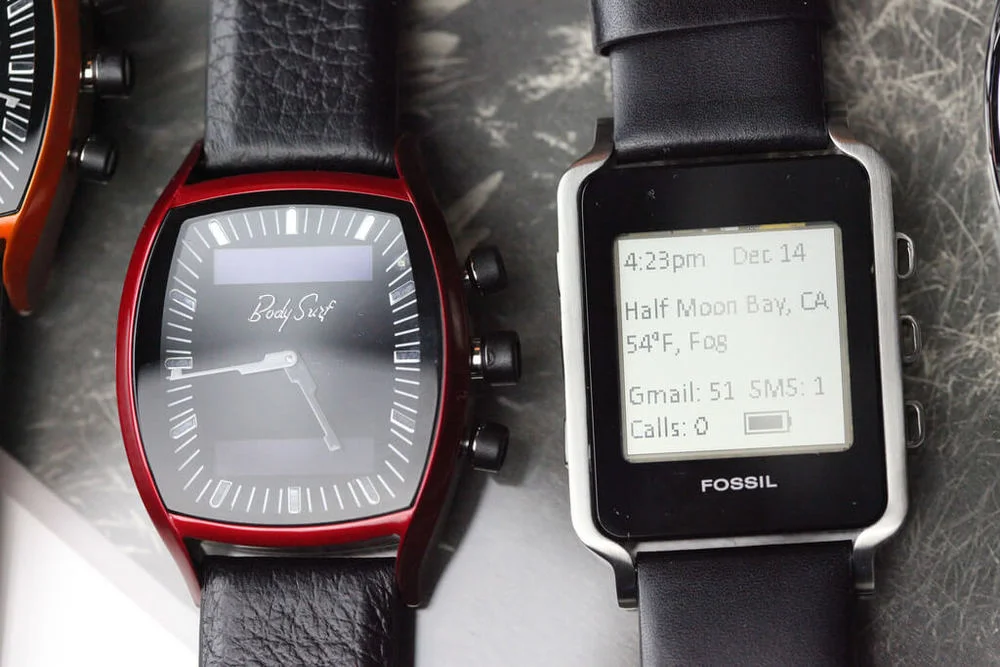
Image by Robert Scoble
Brittany Weinberg is project manager and influence specialist for the MedStar Center for Health Influence and Engagement at the MedStar Institute for Innovation (MI2), and today she shares a guest post with Zansors on wearables for an older population. There are common pitfalls innovators need to understand––and avoid––in order to successfully support older adults who often have one or more chronic conditions.
Stakes are high when we consider wearables for older adults. On one hand, the healthcare support a wearable can provide this population is an immense opportunity to affect quality of life and overall health. On the other hand, it’s a demographic that requires special considerations, and often involves large government stakeholders like Medicare.
This presents obstacles to innovators that have not been fully explored. Best practices are yet to be defined in this new space, so it’s clear common mistakes are not generally due to a lack of trying or caring. It is difficult as an innovator to balance the daily tasks of designing a product and running a company while also seeing the broader, macro landscape of wearable technology, particularly as it relates to an older generation. In the meantime, here are three mistakes that are common yet avoidable if you know what to look for.
Mistake #1: Not Understanding Regulations
Rules and regulations are responding to the evolving nature of technology and ever-changing landscape of healthcare. Innovators should understand current regulations, particularly around Medicare and Medicaid, and plan for regulation changes, so that they can anticipate emerging trends and hack existing trends.
- Understanding the regulations helps innovators designing wearables:
- Appreciate current trends and anticipate changes
- Recognize where regulations are spurring (and funding) innovations
- Identify opportunities for regulatory hacking
Recently, 1776 spent an entire day discussing hacking regulations. Where are the gaps? Where can innovators utilize their experience, creativity, and technology to create solutions to for the problems of today (and yesterday)? And why should innovators hack regulations?
Want to learn more about regulatory hacking? Listen to this great podcast on regulatory hacking.
So, what does this mean for your wearable?
You’ll need to stay up-to-date on rules and regulations that directly or indirectly impact your wearable, and maintain enough flexibility in your product design to respond to regulation changes and opportunities as well as regulation hack opportunities.
Mistake #2: Undervaluing Empathy in Your Design Process
You may think you know, but do you really know?
Many older adults suffer or will suffer from one or more chronic conditions, which likely impacts your wearable design. It is imperative to then incorporate empathy into your design process, as Forbes explains in their article, “Design Thinking: A Unified Framework For Innovation.”
Ask your users questions that will reveal insights on how they may use your wearable and the benefits your wearable would bring to them. For example: Will you describe the problems you encounter when ABC? What workarounds are you using to accomplish your XYZ goals? If you could remove an obstacle from XYZ, what would it be? What do you wish you could change right now? And what is your desired state (i.e. what is best-case scenario)?
Experience the product with your users. Ask them to help you see their obstacles for yourself and to show you how they currently solve problems. Walk their walk, live their story, learn their perspective as if it is your own. Only then can you begin to design a wearable that meets their needs and in a sustainable manner. As many of us are deeply aware, abandonment rate of wearables is still a concern, and that is true for older users as well.
Keep in mind that there is a difference between the purchaser of the wearable and the users of the wearable. Even within “users” of the wearable, there are different categories: Those who wear it to generate data (i.e. the older adult), those who review/collect the data, those who respond accordingly to the data, and more.
What does this mean for your wearable?
You’ll want to start user testing as early as possible. As developers of Path Feel and Path Finder found, user testing may confirm your understanding of how the user would interact with the product and it may reveal some tweaks that need to be made. Also, recognize the different stakeholders that will touch your wearable: the purchaser, the wearer/user, the reviewer/collector of the data, those responding to the data, etc.
Read more on this topic in AARP’s report on 50+ consumers of activity and sleep trackers.
Mistake #3: Not Using Wearables to Bring Together Multiple Stakeholders
Wearables have the unique attributes of collecting important information in real time, sharing it with appropriate parties, and impacting behaviors in order to improve lives. This is especially important for innovating for vulnerable older adults, because of quality of life repercussions. These attributes can be the “bring-together-er” of many stakeholders, including regulators, healthcare providers, family caregivers, architects, wellness coaches, and members of the community.
The aforementioned attributes are ripe for bringing stakeholders together to tackle some of the aging field’s biggest issue:
- Improve outcomes*
- Reduce costs*
- Assist older adults as they age in place
- Enhance quality of life
- Improve patient experience*
* Goals of Medicare “Triple Aim”
What does this mean for your wearable?
As you design your wearable, consider expanding the scope of stakeholders that you originally had in mind. Incorporate them into your design, so that your wearable is not simply a quick fix for a sticky problem, but rather a scalable, sound solution that has multiple players involved and has the potential to improve the lives of older adults everywhere.
So what does this all mean? The way we identify these common pitfalls is by learning from what’s already on the market, listening to consumers and witnessing first-hand what doesn’t work. It’s our collective experience that shows us the way, which means collaboration among innovators is critical to realizing the potential that wearables presents to the healthcare market.
And, that is the reason it is imperative to surround yourself with a talented, passionate team. As we like to say the MedStar Institute for Innovation:
If you want to go fast, go alone. If you want to go far, go together. – African Proverb

Health Tech in Developing Countries: Challenges for Innovative Technology
Innovative health technology is expanding faster than what developing countries can support. So, what can we do?

Image by DVIDSHUB
Dr. Mary Schmidt is President of Schmidt & Libby Health Advisory Group. She is board-certified in infectious diseases and internal medicine. We're excited to share her thoughts as one of our nation’s leading experts on infectious disease! Bringing wearables and health innovation to developing countries is complex. Understanding the process of introducing innovation, including the inherent obstacles, is the first step. This is where Dr. Schmidt shares some great insights.
Eighty percent of the world’s population lives in developing countries. In these countries, limited public health budgets cover millions of lives, from neonates and pregnant mothers to the very old. The ministry of health budget must cover the cost of vaccines, health campaigns, infrastructure, materials, personnel, field healthcare workers, medications, storage, public hospitals and health centers, program monitoring, acquisition of and assessment of population health statistics and measures to contain outbreaks of infectious diseases, and any new technology that will incorporated into the system. Public health depends greatly on public-private partnerships to meet the needs of the population.
You can see why an innovative technology that can provide efficiency and value is an exciting proposition for these countries.
Even so, it’s a challenge for many countries to take full advantage of the opportunity. Innovative health technology is expanding faster than their ability to support and monitor the health benefit and ensure the quality of the technology. Challenges they face include:
Limited technological support after roll-out to monitor the accuracy of the device or repair a defective device
Barriers that need be overcome to ensure the device gets to the desired location, intact, working properly and then disseminated and used correctly
Sporadic availability of electricity and temperature control, which will affect the quality and utility of some devices
Poor port of entry controls resulting in lost or mishandled products, or product stolen for black market use
Additional resources are often needed to overcome language and cultural barriers. Packaging and instructions need to be in a language familiar to the users.
Communication and advertising efforts need to be created with cultural awareness so that the product will be accepted without fear or misunderstanding of its use and intent
Overcoming the Hurdles
Standardization of policies and guidelines in developing countries can be helpful for the industry, but often they are a hurdle in and of themselves.
This year the World Health Organization assembled a team of experts to create recommendations for pre-market, on the market and post market regulation of medical devices. The draft recommendations ensure any technology used to monitor the health, provide care, or test a human biofluid is safe and effective. Investigators of approved or unapproved devices will not only need IRB approval but most likely will need to register the study with the appropriate agency.
For companies, this means taking steps to find, review and comply with the regulations, including all associated laws and be knowledgeable of the penalties. Some items will include registering the item, the manufacturer, importers, authorized representative and distributor. Procedures will need to be in place monitor and report the quality of the device, provide performance and safety data of the device and follow record keeping guidelines.
Partnerships between government and nongovernment organizations and businesses will be essential to the success of any innovative technology in the developing majority of our world.
Knowledge shared about how to overcome barriers and comply with regulations will be important for moving the industry forward and creating value for these counties and communities.
What challenges to do you encounter––or anticipate––when bringing innovation to an developing country?