

Sleep Matters to Reducing Veteran Suicides
Lack of sleep magnifies mental health conditions, sometimes to an extreme extent. Suicide attempts and successes have largely been associated with severe sleep disturbance.
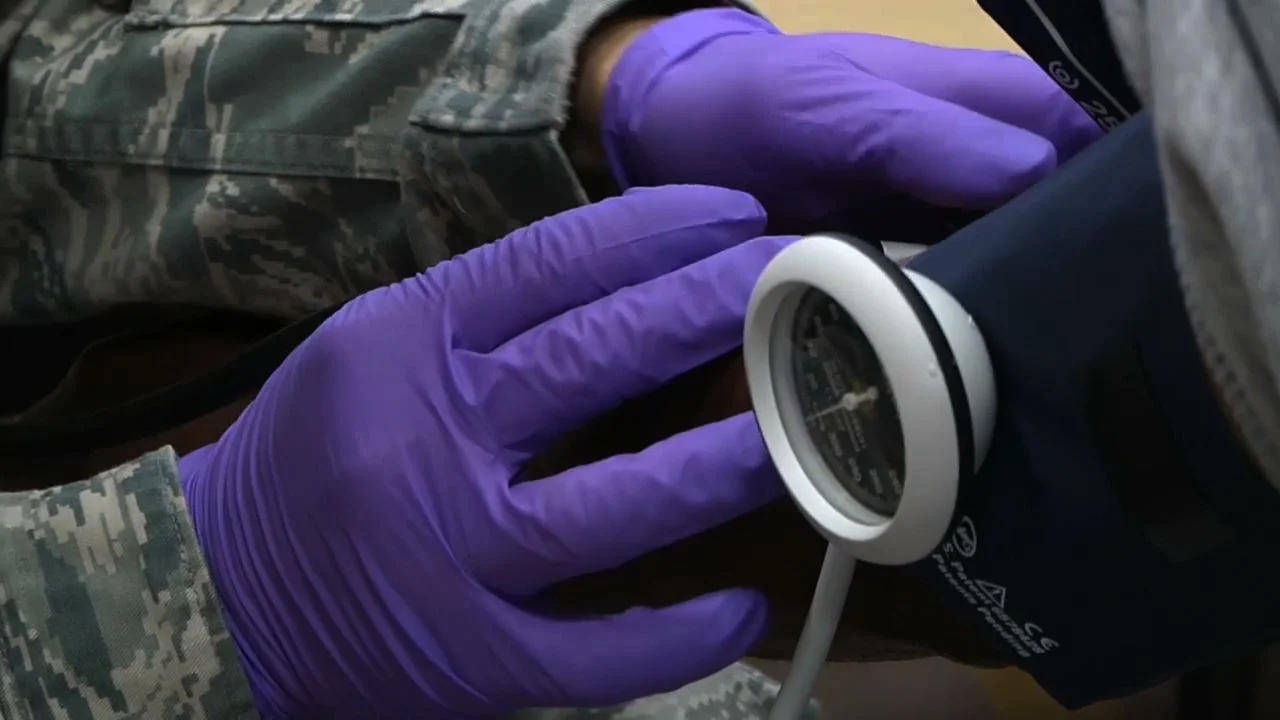
Getting a bad night’s sleep does more than just make you tired the next day. Many of us have had bouts of insomnia and know the frustration that comes with lack of sleep. The problem is that sleep disturbance has a different meaning for millions of Americans with underlying depression, anxiety or other mental health issues. Lack of sleep magnifies mental health conditions, sometimes to an extreme extent. Suicide attempts and successes have largely been associated with severe sleep disturbance.
22 Veterans commit suicide each day across the United States. These tend to be younger veterans (age 18 to 45) with more recent combat exposure who are more likely to have experienced combat-related head trauma and post traumatic stress disorder (PTSD). If we dig deeper into the underlying factors associated with these conditions we uncover sleep as a common thread.
- Up to 39% of returning combat veterans have PTSD. [Ref1]
- 58.3% of soldiers report sleep problems if they experienced head injury with loss of consciousness. [Ref2]
- 30% of soldiers returning from Iraq report complaints of sleep disturbances even 3-4 months after returning from their tour of duty. [Ref3]
- Sleep disturbances predict a shorter time to suicide among suicide decedents. [Ref4]
- Currently, sleep disturbance is the second most common reason for referrals to mental health services following post-deployment screening of Operation Iraqi Freedom veterans. [Ref5]
Sleep is multifactorial and complex. Research supports a number of both biological and psychological factors that contribute to sleep disturbance ranging from breathing disruptions like snoring and apnea (when you actually stop breathing for a short period of time), to stress and anxiety. Therefore, referral to mental health services may only address part of the problem.
Ultimately we need to understand why someone is suffering from sleep disruption in order to optimally manage it, but assessing sleep is complicated. The current gold standard test for sleep assessment is a sleep diagnostic test (polysomnography) that requires an individual to be admitted to a sleep study center and undergo a significant battery of tests designed to monitor sleep and sleep-associated factors. For many Veterans that means taking time off of work and traveling long distances to get to a sleep center, which can further add to the stress of their condition.
Currently, in the VA Health system the average wait time for a sleep study appointment is 8 months. 8 months is a long time to suffer, waiting to get answers, especially in light of the above statistics. Zansors wants to help to support Veterans with wearable devices and mobile apps that can help to track and monitor many of the factors associated with sleep. A wearable sensor device, placed on the body while you sleep, allows tracking of vital breathing habits, snoring, pulse, and can measure other biological factors that tell a story about the quality of sleep. The mobile app asks questions about daily habits, feelings of stress, and activities that might be impacting sleep. Zansors patented technology brings together the findings from the wearable sensor and the information collected from the app and identifies patterns that may emerge to help provide guidance on ways to improve sleep.
Medical interventions and behavioral therapy are both helpful to improve sleep disturbance but today these therapies are typically applied in a doctor’s office or clinic. Zansors wants to enable Veterans to bring those interventions into their own homes, using their own individualized information from the sensor and app to create a sleep improvement plan. The plan can help by providing suggestions to improve sleep, based on clinical research. The plan is designed and personalized based on the information it collects from you. The wearable sensor and app will continue to help to support monitoring and tracking once you’ve started to implement your plan so that you can see real results over time.
Innovation in wearable sensors and digital technology are changing the way health care is being provided. The ability to track and monitor vital sleep-related factors in your own home, privately and securely allows you to make decisions about your own health and empowers you to know that you’re in control of your own care. Innovation like this not only can improve sleep, but it can save lives.
Nicole Stout, DPT, CLT-LANA is Vice President of Medical Affairs at Zansors. Follow Nicole on Twitter at @NicoleStoutPT
- [Ref1] Capaldi VF, Guerrero ML, Kilgore WDS. Sleep Disruptions Among Retuning Combat Veterans from Iraq and Afghanistan. Military Medicine 2011; 176(8): 879-88.
- [Ref2] Lewis V, Creamer M, Failla S. Is poor sleep in veterans a function of post-traumatic stress disorder? Mil Med 2009; 174(9): 948-51.
- [Ref3] Hoge CS, McGurk D, Thomas JL, Cox AL, Engel CC, Castro CA. Mild traumatic brain injury in US Soldiers returning from Iraq. NEJM 2008; 358(5): 453-63.
- [Ref4] Pigeon WR, Britton PC, Ilgen MA, Chapman B, and Conner KR. Sleep Disturbance Preceding Suicide among Veterans. American Journal of Public Health. 2012; 102(S1): S93-S97.
- [Ref5] Pigeon WR, Edinger JD, Epstein DR, Germain A, Haynes P, Martin JL, Mellman TA, Neylan TC, Raskind MA, Ross RJ, Woodward SW, Zayfert C. Report of the Meeting of the Expert Panel on Sleep Disturbance and Combat Trauma. Rochester (NY); 2010.

Lessons from Health Datapalooza 2014
Zansors attended Health Datapalooza in Washington, D.C. from June 1 - 3. This blog is not to summarize the event since there are other great sites to do this. Instead, we want to share our “lessons learned” and other observations.
Zansors attended Health Datapalooza in Washington, D.C. from June 1 - 3. This blog is not to summarize the event since there are other great sites to do this. Instead, we want to share our “lessons learned” and other observations.
First, the Affordable Care Act (ACA) legislation will create new market opportunities for companies to unleash data whether administrative data or clinical data. Entrepreneurial companies like Zansors need to figure out how sensors, apps, algorithms, etc. can unleash the data as the original “liberation” spirit touted by pioneers like Todd Park (CTO of White House) who with Jonathan Bush (CEO of Athenahealth), and others created the Datapalooza movement. We must view the ACA as piece of legislation like Telecommunications Act of 1996 that opened new possibilities especially for entreprenurs. It is very exciting to see how federal agencies like FDA, CMS, NIH and others are unleashing their data so hackers can mash-up the data. The ACA allows taxpayers to see how well or bad our tax dollars are being spent by different stakeholders. In other words, ACA provides some transparency with health data.
Next, the promotion of Accountable Care Organizations (ACO) by the public, nonprofit, and private industry will unleash data. The ACA law helps foster ACO who are building new business models that require quality instead of fee-for-service. We think that ACO will help unleash data by utilizing more mobile and digital health tools like wearable sensors for sleep, physical activity, EKG, and point of care diagnostics. ACO allow for more de-centralized care and more “medical homes.” In this scenario led ACO, data coming from the patient or consumer is more important than data from the old model at the hospital or doctor office. Get ready for ACO!
While at Health Datapalooza, many panelists talked about engaging consumers. If the new focus is on engagement, then we think tools that are more mobile-like and digital-like can be ways to unleash data. Zansors feels that our sensors and apps can work with your mobile phones, tablets, and cable box to give you more useful data that engages you. After all, Zansors’ tagline is “Know Yourself.” If Zansors is going to engage you with data, then we will build the best algorithms and data visualizations so you don’t get dumped with pointless data but instead you get the right data to make decisions. Engagement means that Zansors delivers smart data to “know yourself.”
The final observation from Health Datapalooza is that the focus seemed to be on the collection of data and infrastructure development of data like electronic health records (EHR). This has been going on for a while. We view these activities as necessary for the general ecosystem but that is not where we play. However, Zansors focus will be to create data products that the individual user can consume. We want to give you products where you can “consume” data from your own body and your own body signal (breathing, pulse, blood sugar, etc.). In other words, “know yourself” by “consuming data with consumer products. It’s part of the Zansors way to democratize technology.
As a side note, we are so happy and thankful to the organizers of Health Datapalooza because they highlighted the great aspects of Washington, D.C. The Sunday evening along the river was amazing time over good food and drinks and gave a chance to exchange among great peers. The venue for Health Datapalooza was in the lovely D.C. neighborhood of Adams Morgan so guests caught a snapshot of D.C. charm. Some of the networking events Monday evening allowed guests to see U.S. Capitol or Washington Monument with rooftop view. We look forward to next year’s Health Datapalooza and unleashing more data.
Know Yourself

Jill Spaeth: Recapping AARP's Innovation Summit
Zansors was one of the top 10 startups (selected out of about 200!) to pitch our sleep sensor to AARP members and venture capitalists.
I’m finally coming down off my adrenaline rush that was last weekend in Boston for AARP’s Innovation@50+ conference. Zansors was one of the top 10 startups (selected out of about 200!) to pitch our sleep sensor to AARP members and venture capitalists (VCs).
We treated this event as an opportunity to launch our brand and get feedback on our first sensor. While the future of Zansors will include different types of sensors, allowing you to collect and understand your personal health analytics on many levels, we started with sleep because we believe it’s the platform on which each day is built. Sleep is at the core of human function.
With polished industrial design images and one of our first prototypes in hand, we met with AARP members, some of our target customers, and got one-on-one feedback on our sensor. We discussed everything from size, shape, feel, use, cost and on the overall idea of capturing one’s sleep quality. Talking to our customers was invaluable – they asked great questions, shared concerns and even gave us some great sales and marketing ideas! My favorite part was seeing their facial expression, in person, after explaining what our product captures and what it can do for their health. With each smile (or astonished stare) I was reminded that all our hard work was worth it. We’re going to improve lives.
The pitch I gave was definitely memorable, and that was the idea. We were there to launch Zansors and our position that health care should be based on you and not someone like you. We want our customers to better know themselves and we’re dedicated to developing products that fit our mission.
I couldn’t end this post without thanking the event host AARP, especially the innovation@50+ team. Giving startups a platform to pitch and share their idea with such a wide audience is a one-of-a-kind opportunity. It’s this kind of forward thinking that keeps large organizations relevant and creates some real possibilities.

A New Sense of Urgency: Next Steps After the American Academy of Pediatrics Revised Guidelines for Sleep Apnea and Snoring for Children
On Monday, August 27th 2012, the American Academy of Pediatrics (AAP) released new guidelines for physicians regarding uncomplicated obstructive sleep apnea syndrome (OSAS), a condition where breathing is interrupted during sleep in relation to enlarged tonsils or obesity.

American Academy of Pediatrics
On Monday, August 27th 2012, the American Academy of Pediatrics (AAP) released new guidelines for physicians regarding uncomplicated obstructive sleep apnea syndrome (OSAS), a condition where breathing is interrupted during sleep in relation to enlarged tonsils or obesity. These new guidelines come ten years after initial guidelines were implemented in 2002 where further research on childhood sleep apnea was produced. Between 1999 and 2010, 3166 new articles were written with 350 providing relevant data. The report states that if left untreated, delayed diagnosis of childhood sleep apnea can lead to complications affecting behavior, learning, cardiovascular system, growth and development.Recommendations remain similar: at routine health visits for all children, physicians should inquire if a child or teen snores regularly. Standard of care remains focused on sleep studies, adenotonsillectomy, CPAP machine (continuous positive airway pressure – a nighttime breathing apparatus) and weight reduction.
A search query for AAP sleep guidelines shows an abundance of coverage for the recent news. However, what happens next will strengthen these guidelines. Zansors believes three areas of focus need to occur:
- Awareness – Sleep medicine for children needs more attention. Your child’s sleep is related to many aspects of their lives and guides their daytime activities. Sleep affects their health and wellness, therefore, we should learn more about a child’s sleep beyond the amount of sleep, but also the quality of sleep he/she gets each night.
- Physician action – Physicians are clear on their screening practices. The total spectrum of sleep quality should be evaluated beyond snoring and sleep-related breathing disorders.
- Parent empowerment – The most likely opportunity to report to a pediatrician if a child snores is by the parents who need easy-to-understand, self-help tools and guiding information to participate in this process to initiate proper identification and management of childhood sleep apnea.

Is Your Little Sleeper a Sleep Champ?
We at Zansors are passionate about improving sleep quality for children and teens. The Sleep ChampTM app addresses concerns addressed by the AAP. Sleep ChampTM guides parents through a series of questions relating to snoring, breathing difficulties, behavior, growth and development. After answering questions, a score report is generated which can be printed or emailed. Sleep ChampTM also includes web resources to help parents understand various medical terms addressed in the questions. These questions were developed through 15 years of clinical research by Dr. Ronald Chervin of the University of Michigan Sleep Disorders Center in Ann Arbor, Michigan. We find this can be a powerful tool for parents who wish to initiate the evaluation of sleep apnea for their child. If you are still not convinced about Sleep ChampTM, then check out our other blogs by our own staff who are parents or even my “Top 10” list.
In the coming days, we will announce our strategy for social engagement and public service for those who wish to join a community of empowered parents who wish to utilize the AAP’s guidelines. Physicians need the collaborative efforts of parents in identifying children who snore.
Child snoring is not funny, child snoring is serious.
Ranjit Das, M.D. Zansors Chief Medical Innovation Officer
Email: ranjit@zansors.com Twitter: @MADEinDNA
More information on the Sleep ChampTM app:Website Download for Apple Download for Android Twitter Facebook