

Springtime at Zansors: Patents, Drinking & More
With the official announcement of the spring season, we at Zansors take time to assess how we are faring towards our mission of helping people take charge of their health. Continuing our tradition, here’s the springtime roundup of what we were up to in the past one year…
With the official announcement of the spring season, we at Zansors take time to assess how we are faring towards our mission of helping people take charge of their health. Continuing our tradition, here’s the springtime roundup of what we were up to in the past one year…
Leading the Way with Innovation
It was a milestone year for Zansors in terms of building our intellectual property (IP) portfolio. Zansors had two utility patents issued around our wearable biosensors! Securing IP is not an end in itself for us. Our utility patent for wearable patch is critical to supporting Zansors’ goal to provide personal health analytics tech wearables that are accessible and affordable to consumers. With our utility patent for wireless electrocardiogram (ECG/EKG) sensor, Zansors is opening up a future that allows patients the same accuracy of readings on their smartphone that they currently can only experience in a clinical setting.

Zansors Labs is making exciting progress in building not just our IP portfolio but also our innovation portfolio through cutting-edge R&D. Zansors Labs developed a prototype sensor patch to detect blood alcohol from your sweat. Last year we completed the proof-of-concept “clinical” study; outside of clinic, by the way— that’s the future of clinical studies— in the wild! Imagine going out for drinks, slapping on a sweat sensor patch, and being able to quietly check how you’re doing on your smartphone. No one need know, and you get to stay safe on the drive home.
We shouldn’t forget our tiniest patients though. Zansors Labs, in collaboration with George Washington University, is working to create blood glucose monitoring sensors for babies in the Neonatal Intensive Care Unit (NICU). Zansors’ continuous monitoring sensor patch is designed to monitor glucose constantly under the skin, instead of via occasional heel sticks; thereby reducing amount of blood collected and pain caused to babies. We are proud to be working on new frontiers in the wearable sensing and mobile health tech world.
Follow us @Zansors to keep updated about the latest innovations coming out of Zansors labs!
Spreading Ideas with Thought Leadership
Zansors was fortunate to be offered reputable media platforms in the past one year to spread the ideas we believe in. And of course, it always feels good to have your efforts being recognized.
We were excited to be featured by Discovery Channel in a segment on on-demand health and the future of wearable tech last year! It was especially noted how Zansors is working on building sensors and apps that are medical-grade. In case you missed it, you can watch the web segment here.

Discovery Channel shoot at Zansors office
It is exciting, at the same time, to be recognized by a reputable authority in the field itself. We were honored by featured by the Journal of American Medical Association (JAMA) in their column titled “In-home, Over-the-counter Sleep Apnea Sensor on the Horizon”. Zansors also got recognition in a market research report published by Tractica where Zansors was listed as a key industry player in health wearable space alongside of companies like Abbott, Medtronic, Philips and Qualcomm Life.
Zansors team continued spreading ideas and engaging communities as thought leaders. Abhijit Dasgupta, PhD (@webbedfeet), Co-founder and Chief Data Science Officer at Zansors, was interviewed by Sleep Junkies, a well-known source of what’s latest in sleep tech world. Abhijit is also active in local health industry community. He presented at Health TechNet, one of the most popular, interactive and educational forums for health care technology and biotech companies in the Washington D.C. area where he talked about medical-grade wearable tech. Nicole Stout (@NicoleStoutPT), our VP of Medical Affairs, was quoted in an article in Healthcare Dive, a healthcare industry magazine. As Nicole puts it: “When you are getting into the medical space and getting healthcare providers to use data from digital health technologies and wearables, it’s got to be fairly precise.” Nicole also spoke at 2nd annual ‘Women in PT Summit’, supporting its mission to serve as the catalyst for women in the physical therapy industry.
I would also like to thank our guest blog contributors who shared some amazing content in their blog posts: Meredith McQuerry, Ph.D, Deirdre A. Conroy, PhD, John Pietrangelo and Cherilyn Cecchini, M.D. Check out our blog page to read these interesting posts!
Building Tech for Future
Want a peek into how Zansors’ tech can be applied in the future? One example is our partnership announcement with Blauer Manufacturing Inc. to introduce wearable technology in defense textiles for first responders and the military. A new category of defense garments can capture biometric data, like breathing, motion or ECG, as well as external factors such as determining location or detecting chemical gases! We’re also developing small but mighty wearable sensors that provide important situational analytics for our armed forces giving them a competitive edge in the battle field.
While developing the front-end technologies are important, we also build the back-end infrastructure for integration. To that end, Zansors Labs has built HIPAA-compliant cloud system so that patients or users have a secure way to store or send their personal health data to their healthcare team. In a world of data breaches, protecting your privacy is critical.
Blooming Soon…
Our mission is not complete until the technologies we develop reach masses and help them achieve a better life. Therefore, we’re working hard to bring products to market soon. 2018 will be the year of product launches for Zansors! Stay tuned with us by subscribing to our email newsletter below.
Kashyap Purani is Director of Marketing & Business Development and Product Manager at Zansors. You can follow him on Twitter @puranikashyap.

Disruptive Innovation in a Traditional Industry: Wearable Tech and the Future of Firefighter Personal Protective Equipment
In today’s ever-changing world of constant technological innovations, there exists a gadget, sensor, or electronic to measure, report, and analyze almost any type of data we might desire. As sensor technology has evolved, systems have gotten lighter and less cumbersome, enabling them to fit into our cell phones, watches, wearable devices and even our clothing.
In today’s ever-changing world of constant technological innovations, there exists a gadget, sensor, or electronic to measure, report, and analyze almost any type of data we might desire. As sensor technology has evolved, systems have gotten lighter and less cumbersome, enabling them to fit into our cell phones, watches, wearable devices and even our clothing. Wearable technology involves the use of smart electronic devices that can be easily worn on the body via an accessory or incorporated directly into our clothing. For most consumers, these new tech gadgets are fun and exciting; a “toy” so to speak, that enhances their daily fitness routine. But for others, these devices can mean the difference between life and death; and the implementation isn’t quite so straightforward in some cases.
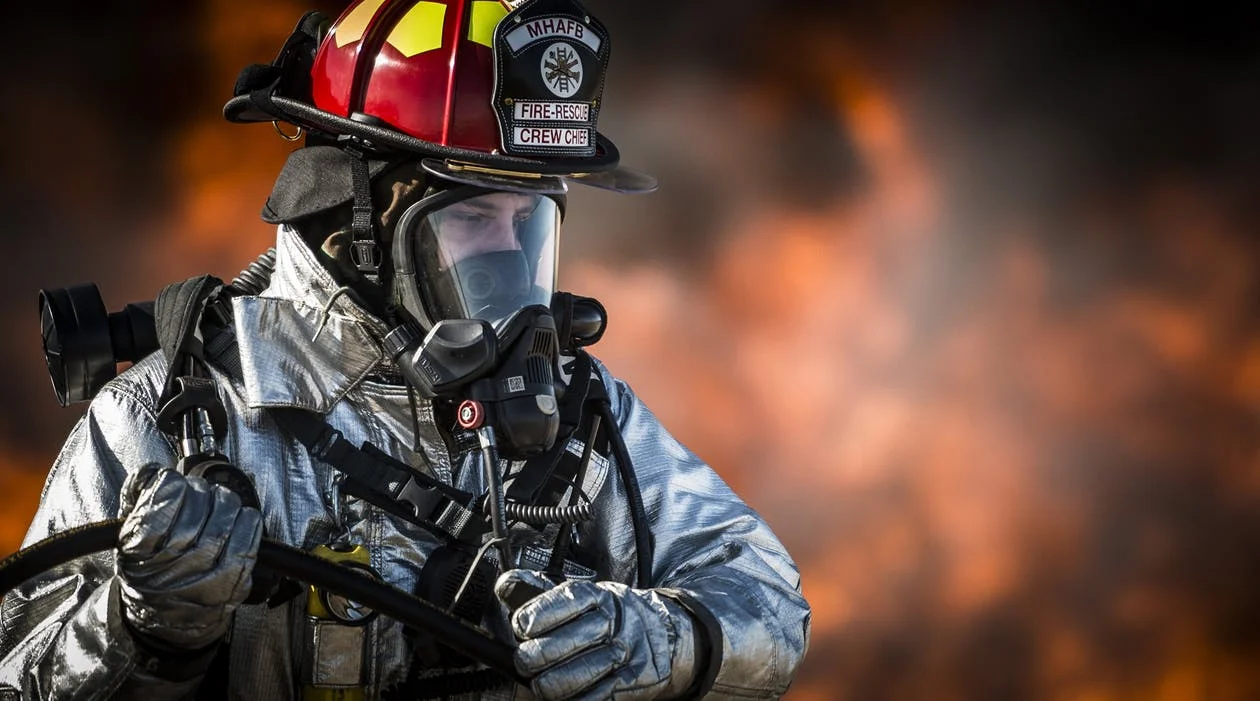
Take firefighters for example, whether working inside a structure or fighting a wildfire in open geography, firefighters require specialized personal protective equipment (PPE), tools, and technologies to ensure their safety. Many protection and health issues still exist in the fire service industry such as heat stress, cardiac arrest, and exposure to carcinogenic particulates, just to name a few. The risk of firefighter injury and illness could be greatly reduced with the introduction of wearable technology. Measuring real time physiological responses, monitoring health, and tracking location would provide vital, life-saving feedback for the fire service. Some manufacturers have already successfully produced wearable garments for firefighters to track their location, heart rate, etc., however, the technology is still cost prohibitive for most departments who are working on a tight budget. At well over $1,000 for a set of turnout gear, PPE budgets don’t have additional discretionary funds for “fun, tech toys.”
In order to make wearable tech a feasible, realistic option in the fire service industry, multiple challenges must be overcome. First, as mentioned above, cost must be addressed. Affordable, scalable sensors are a must if wearable tech is to be incorporated into structural turnout suits and wild-land firefighter gear. Second, in an industry that is known for its historical tradition and culture, the mindsets of the users must be convinced that the benefits of these disruptive technologies far outweigh the cost, and not just in terms of monetary value. As a population that puts their lives on the line each and every day, firefighters must be convinced that a significant change to their PPE is safe and worth any adaptations to their current tactics and training.

A third, and maybe the most challenging obstacle is creating sensors that can perform effectively and consistently under the extreme conditions in which firefighters often find themselves. In a flashover scenario, temperatures may reach well over 500°C. These environments would require durable sensors that can withstand extreme conditions and repeatedly perform after multiple exposures. Further, these sensors must not cause any decrease in thermal, chemical, or liquid protection; hinder the user’s movement; or cause discomfort. On top of all of the above criteria, the sensors must also be conducive to the laundering process at temperatures above 120°F. To overcome all of the above criteria would be a tall feat, even for the most developed technologies.
To truly enact change in firefighter PPE, all of the above concerns must be addressed not just from an academic or scientific standpoint, but from a practical, daily use perspective. While sensor technology has greatly advanced, there is still much work to do in order to incorporate these valuable, life-saving technologies into the applications where they are most meaningful. For firefighters, being able to track location, movement, heart rate, breathing rate, carbon monoxide exposure, and so much more, could be the difference between them going home to their families or an unfortunate tragedy. Sensor technology gives us hope for the future, but much research and work is still needed to create affordable, adoptable, and practical wearable technology for our first responders.
Meredith McQuerry, Ph.D., is an Assistant Professor of Textiles at Florida State University. She has almost a decade of experience working with the fire service industry to engineer better performing and more durable personal protective clothing. Her research interests include clothing comfort physiology for first responder, military, and athletic applications.

Supporting Our Troops with Wearable Sensor Technology
High tech and the military go hand-in-hand. The Armed Forces are often the first adopters of new technology to give them a competitive edge. Dual-use technologies are the same innovations being used in the defense sector and later embraced across other areas of society
High tech and the military go hand-in-hand. The Armed Forces are often the first adopters of new technology to give them a competitive edge. Dual-use technologies are the same innovations being used in the defense sector and later embraced across other areas of society (e.g. Defense Department’s DARPA invented the Internet). Hopefully, some healthcare technologies used in the military can later diffuse into the civilian sector. Adding to the list of advancements, Zansors is developing small but mighty wearable sensors that provide important situational analytics.
Wearable sensor technologies are a crucial step forward in supporting the health of our troops, changing the way we train and deploy, and maximizing the capabilities of our warriors. Nicole Stout, VP of Medical Affairs at Zansors, elaborates on the potential applications of Zansors’ technology in this video:
With such comprehensive information gathering, the military can operate while minimizing undue risk to personnel. Going into dangerous areas and grappling with extreme external conditions, Zansors’ technology will assist in making sure that every soldier is able to perform his or her best, as comfortably and safely as possible.
Zansors is committed to creating digital solutions for hitherto unmet needs. The amazing advancements we’ve so quickly seen thanks to technology’s rapid development means that we can help people in ways before not thought possible. By thinking creatively, Zansors continues to innovate real, powerful solutions for the US military mission, changing the way we approach soldier care and empowering the Armed Forces with the personal health analytics that they, more than anyone, require.

Getting Quality-based Payment Models Right Means Replacing X12
The Centers for Medicare and Medicaid Services (CMS) are beginning to implement alternative payment models, fundamentally changing how health care providers are paid across America.
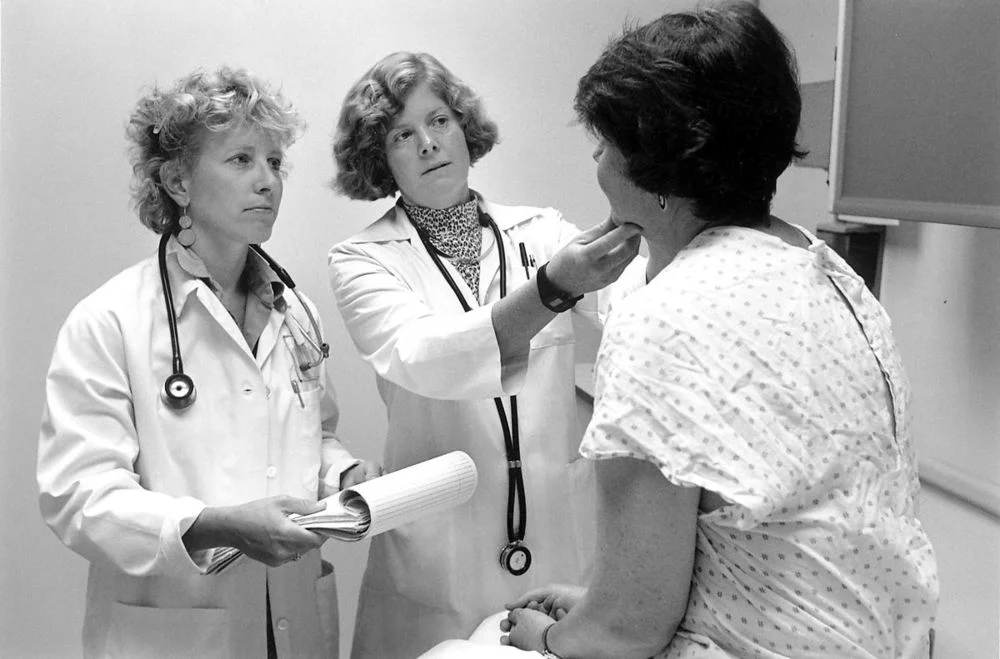
Image by seattle municipal archives
The Centers for Medicare and Medicaid Services (CMS) are beginning to implement alternative payment models, fundamentally changing how health care providers are paid across America. The key shift is driving towards payment based on outcomes instead of on simply billing for services provided. Outcomes-adjusted payments are often called “Pay for Performance” as opposed to “Fee for Service”. Some provider interest groups have, perhaps wisely, helped slow down CMS implementation of MACRA. The Community Oncology Alliance appears is presenting alternative payment models of their own. Perhaps a number of alternative payment models for different diagnosis is an ideal final state for provider payment reform. No matter what we end up calling payment reform, one thing is clear; it requires maintenance and analysis of population-level health data. Outcome-based payments are population-based (capitation-based) and hence good population reporting is a pre-requisite to getting alternative payment models right.
Medicare, state Medicaid departments, and private insurance companies could greatly simplify clinical quality measure collection and their overall operations by moving away from antiquated and closed-source X12 transactions to a modern Internet-friendly file format. A new, JSON-based format could carry the necessary data for calculating population-level clinical quality measures. Some benefits of a JSON-based format include:
- Human Readability – Although JSON is a machine-readable format, JSON documents are far more human readable than X12 files.
- Transparency – Any new transaction format should be open-source and free from the closed-source, pay-to-play nature of X12.
- Usability – Just about every computer programming language has tools for working with JSON, but none to my knowledge have built-in ability to work with X12. JSON is designed for the Internet age whereas X12 was created prior to the proliferation of the Internet.
It’s not just the aforementioned benefits that make this change so important. The complexity and closed sourced nature of X12 greatly contributes to the cost and the complexity of Medicaid Management Information Systems (MMIS), and Medicare’s own transaction processing system. A shift away from the esoteric in favor of the common invites healthy competition into these markets and benefits small businesses as well as the American taxpayer.
Perhaps there is already a contender for an X12 replacement. It is possible that the open-source HL7 FHIR standard could be a suitable basis for such a new transaction format, but further research is needed. HL7 FHIR, to its credit, already has many of the desired characteristics and resources defined that could support business cases currently covered by X12. Some examples of such resources definitions include “Claim”, “ExplanationOfBenefit”, and “ProcedureRequest”. Trying to come up with a suitable replacement for X12 with the goal to simplify reporting of clinical quality measures is a worthy pursuit deserving of further research and consideration. Upsides include lowering the cost and complexity of health care delivery while improving patient outcomes.
Alan Viars is the founder and president of Videntity, Inc., a software company focused on secure health solutions. He provides NIST systems architecture support for Health IT standards and testing for Meaningful Use with an emphasis on Direct and Transport testing. He manages Direct certificates and cloud infrastructure (EC2) in support of the Meaningful Use EHR certification program. Viars provides subject matter expertise to the Office of the National Coordinator for Health IT (ONC) on provider directory initiatives. Viars provides technical expertise to the Centers for Medicare and Medicaid Services (CMS) as one of the lead software contributors to the Blue Button API. Blue Button API will make it possible for Medicare beneficiaries can share their health data with applications of their choosing. Viars was a former HHS external entrepreneur in residence where he was on detail to CMS, where he led the redesign of the National Plan and Provider Enumeration System (NPPES). Prior to founding Videntity, Viars served as the lead architect for the Department of Defense (DOD) Automated Biometrics Identification System (ABIS), an exchange platform based on open standards published by NIST. As the lead author of DOD's Electronic Biometric Transmission Specification 1.0, Viars was responsible for achieving the successful exchange of subject information and widespread interoperability between various DOD agencies, FBI, DHS, and others. Viars represented DOD's interests to NIST for four years, and remains an active participant in NIST's biometrics interchange standards process. He serves as a subject matter expert for U.S. government agencies including the FBI and Special Operations Command (SOCOM) in biometrics, identity management, and related open standards. Viars holds a Masters in Computer Science and a Masters in Business Administration from West Virginia University.

Springtime at Zansors: Progress, Renewal and Excitement
Spring is in the air!!! Spring is a time for opening closets and boxes, airing out the house and renewing actions and activities as we thaw out from the cold winter.

Dr. Abhijit Dasgupta
Spring is in the air!!! Spring is a time for opening closets and boxes, airing out the house and renewing actions and activities as we thaw out from the cold winter. Zansors is no different. We’d like to open our doors and windows and let you in to see what we’ve been up to as a company and the exciting places we’re going in 2016.
Let me start with a re-introduction. Zansors is a biotechnology, sensor and mobile app company based in the DC metro area, who wants to help you Know Yourself. We are involved in several R & D projects with collaborators both locally and nationally, sponsored in part by the National Institutes of Health (NIH), to create the usable, relevant, reliable and accurate tools (not toys) that will help you, your loved ones, and your caregivers learn about you.
Know YourselfTM
This is us, our mission. To help you know yourself. This is why we’re passionate about building the best, reliable and accurate sensor platforms and apps for health and wellness. Today, we live in an “on demand” world where everything, from banking to communication to information, is at our fingertips on our smartphones and pads. We ask, why can’t information about how we’re doing be in the same “on demand” world? Why can’t you instantly know if you’re dehydrated after a run (especially in the muggy East Coast summers), or whether you really achieved a good night’s sleep, or if you’re holding on to stress after a hard day at work, or if you are truly relaxed before you go to sleep. Our bodies are amazing, and like all of nature gives us signals if only we’re willing to listen. Our sensors and apps are your listening device, your portal into how you’re doing. Monitoring breathing, sweat, temperature, heart rate and even components in your skin and blood can provide great insight into your current state, available to you at the touch of a Zansors button. To find out more about how Zansors can help you know yourself, please watch this brief movie.

Image by randy ohc
As a company we are inspired by management guru Jim Collins’ concept of BHAGs, or big-hairy-audacious-goals. Our BHAGs are motivated by our brand ethos of Know Yourself, and are aimed at enabling positive change for individuals, society and humanity as a whole. For example, our sensors can be used for babies in the neonatal intensive care unit (NICU), for children in the poorest parts of the world where they can enable accurate screening of pneumonia, for water testing in homes and communities, for detecting silent heart attacks in women, and for improving the lives of cancer survivors. The common theme here is that we want to produce sensors and apps that empower the individual, the family, and the community. The story of Flint, Michigan is fresh in our minds, and the impact on families there could have greatly reduced if families had access to do-it-yourself water biosensors.
Tools, not toys
Zansors is entering a world where wearables and sensors have become commonplace, but not reliable. A quick Google search can reveal problems with consumer wearables even with as simple a task as counting steps, let alone trying to figure out someone’s sleep. These products are used for a few months, are not reliable or accurate, and soon are consigned to the kitchen drawer. To our way of thinking, these are not useful products; they are toys.
Zansors’ mission of helping you Know Yourself means we will provide you with reliable, accurate, useful products, i.e., products you can depend and rely on as a portal into yourself. As we go through R&D and manufacturing, we’re always driven to build the best evidence-backed products we can. We want to create tools, not toys. This is our map. At every step of our process, we reflect to ensure that we follow this map and create the best possible evidence-driven tools for you. How do we do this?
Superheroes in lab coats in Zansors Labs: We have a superhero team of bioengineers, data scientists, information architects, software programmers, hardware designers and design experts. They work at their desks and on their benches solving hard problems in healthcare that translate into products you will use.
Superheroes building the future: We want to create tools that are futuristic, ahead of our time, and perhaps beyond what you’ve thought possible, or which solve a very hard problem like a BHAG.
Superheroes prove their tools, not just make tall claims: Our tools have already gone through some clinical testing against current gold standards. Many of our tools have been supported by the NIH SBIR (Small Business Innovation Research) and STTR (Small Business Technology Transfer) programs, where they have undergone peer review. We use good study design, statistical thinking, and modern algorithms to ensure that our tools are backed by strong evidence, and we’re willing to show you the data. We will share the “beef” with the scientific community through conferences, journals and scientific reports.
Clinical testing rules!: Tools should be safe, useful and reliable. Many of our tools will need to be tested in a clinical setting. In fact, we want our tools to be in Institutional Review Board (IRB) approved studies, where our tools are required to be safe and effective before being tested on patients and animals. This allows us to assure you that what you get from Zansors is of high quality, safe and effective.
Highlights from 2015
The Zansors scientific and production teams worked hard in 2015 to conceptualize, design and build high quality products that you will soon see. Here are some highlights for the year
Met President Obama to talk about innovation! Yes, that President Obama! The White House invited Zansors Co-Founder and Chief Data Science Officer Dr. Abhijit Dasgupta to attend the highly rated Hardball TV program and talk about small business needs in trade with Asia, and aspects of intellectual property, patents and copyright as it pertains to small businesses and trade. President Obama kept referring to our very own Abhijit as “the good doctor”.
Completed an IRB-approved clinical study: Wearable tools made by Zansors went through our first IRB-approved clinical study on patients. We were lucky to collaborate with the University of Michigan to recruit patients and apply our products to test against gold-standard healthcare technologies.
Winning grants for our sensor and app innovations: The National Institutes of Health (NIH) is one of the world’s premiere organizations supporting innovative research and development in medicine and healthcare technologies. NIH offers research grants to small businesses that are awarded after careful scientific peer review and vetting of commercialization plans. We have been fortunate to be awarded several small business research grants over the year that have helped us advance our technologies, allowed us to maintain our focus on BHAGs and our mission to create tools to Know Yourself, and ensure strong evidence-based products.
Excitement for 2016
Here is a peek at what you can expect from Zansors this year!!
Bring real products: Yes, Zansors is about Research and Development (R&D) and innovation. We have made good progress towards bringing you the tools and products you can use in your own home to Know Yourself. We will be introducing our first product later this year. Stay tuned!
New team members: We have maintained a core group of superhero team members for a few years, but are always on the lookout for great talent to help us on our mission. Among others, we are lucky to have added Nicole Stout, DPT, CLT_LANA as our Vice President of Medical Affairs. Nicole brings an amazing career and experience as a former clinical researcher at Walter Reed Hospital, cancer rehabilitation researcher, and a well-known expert in telemedicine. She’s emblematic of the type of multi-talented individuals that make up this company, driving it to deliver products and tools that will make a difference to the consumer, patient, healthcare professional.
More partnerships: We have built strong partnerships with academic departments and medical centers that support our mission and help with our R&D. We will continue to work with world-class organizations like the University of Michigan, George Washington University, George Mason University and University of Nebraska-Lincoln. In the coming months, we will also be announcing exciting collaborative partnerships with several not-for-profit organizations and large corporations. We also look to expand our partnerships to other Federal agencies beyond successful existing relationships with the NIH and the National Cancer Institute.
As Zansors gears up to show you what's possible to Know Yourself, creating tools that will change the way you view your health and well-being, stay tuned to this channel. We'd love to have you along for the ride!
About the author
Dr. Abhijit Dasgupta is Co-Founder and Chief Data Science Officer of Zansors, LLC.

Jason Waxberg: The Progression from Toys to Tools
When your aspirations are to change the world for the better are based on unsolved real problems, you better stick to your guns. We have a saying here at Zansors HQ, “Science wins.” We believe that by grounding everything we do in science we can create products and services that will not only bring value to your life, but also maintain that value over time.
When your aspirations are to change the world for the better are based on unsolved real problems, you better stick to your guns. We have a saying here at Zansors HQ, “Science wins.” We believe that by grounding everything we do in science we can create products and services that will not only bring value to your life, but also maintain that value over time.
Zansors products are novel, not novelty. It’s up to us to reshape the conversation away from the step counting gamification into something much greater – using intuitive, non-invasive tools to help maintain health and create better wellness. Under this tools not toys banner, Zansors will be bringing to market its first product and a few new services in the 2nd half of 2014.
Today marks an important step in that direction. Today we announce the beginning of our consumer focused roadshow, expected to last into early summer. We couldn’t be more excited about the opportunity. Through in person events and online portals we’ll be creating exciting opportunities for us to interact with each other to create amazing conversations about the benefits of incorporating scientific tools into your life. Get ready for a lot of science. Get ready for a lot of winning.
This week, members of Zansors’s leadership team will be at AARP’s Spring 2014 Life@50+ National Event and Expo in Boston. We’re excited about a number of opportunities, including the chance to gain feedback from potential customers, meeting with potential partners and of course, presenting at the 3rd AARP Health Innovation@50+ LivePitch, where Chief Creative Officer Jill Spaeth will be introducing to the world our new sleep sensors.
Next week, Zansors will be at the American TeleMedicine Association 2014 in Baltimore, where we’ll be talking about Zansors’s role in digital health and wearable sensors.
We couldn’t think of better places than at the intersection of science and society than to start the next leg of our journey. If you’re going to be at one of these events, stop by and say hello, we would love to hear from you. If not, reach out to us via email or over at Twitter or Facebook.
We’ll be announcing more events in the coming weeks, so stay tuned!
Jason Waxberg, Chief Growth Officer, Zansors

Zansors Aspirations
Zansors is a start-up business with great aspirations. Our aspirations to change the world for the better are based on unsolved real problems. Many of these problems are well defined; this chart explains existing challenges with chronic disease, the aging population, hospital readmissions, and physician shortages.
Aspirations
Zansors is a start-up business with great aspirations. Our aspirations to change the world for the better are based on unsolved real problems. Many of these problems are well defined; this chart explains existing challenges with chronic disease, the aging population, hospital readmissions, and physician shortages. But today, problems like diabetes, obesity, access to affordable care, among many others, are global problems. More than ever, health and wellness solutions should help not only developed countries but also those at the bottom-of-the-pyramid (BOP), as Professor C.K. Prahalad advocated.
A small business like Zansors needs put our flag in the ground declaring our entrepreneurial calling in health and wellness. People may think we are crazy and too ambitious, but that is when Zansors gets inspiration to change the world based on Apple’s brilliant video that says “Think Different.” The role of entrepreneurial companies is to create and destroy. We can’t accept outdated business models that are stagnating progress. As a young company, Zansors needs to be brave; our bravery to accept the challenges facing the world in health and wellness is no different than that exemplified by the excellent video by Red Bull. Certain people embrace challenges even when others may think you are crazy. How does Zansors practice this “think different” mantra and bravery on a practical manner? Well, it starts with the revolution of the Internet and mobile devices. Perhaps the concepts of “Think Different” and bravery are best captured when President John F. Kennedy gave the 1961 speech where he eloquently said “We choose to go to the Moon.”
We live in exciting times, with the Internet, wireless data, and mobile devices like cell phones and tablets. Translating and leveraging these mobile wireless technologies to improve your health and wellness is an exciting prospect for us. Zansors believes that it has the super-hero team and “secret sauce” to bring accessible health and wellness solutions to you. Specifically, we want to bring technology solutions with wearable sensors measuring physiological health (e.g. heartbeat, temperature, pressure) and biofluids (e.g. blood, sweat, etc.), addressing real-life problems and conditions you face. Zansors will commercialize bioengineered devices and apps that improve your health, and make it easier for you to see how you are doing. We will be sharing more specifics examples in the coming months, so stay tuned.
We admire our peer entrepreneurs in all industries but we are reminded of the famous quote by Jeff Hammerbacher (early Facebook employee) who said in Businessweek, “The best minds of my generation are thinking about how to make people click ads. That sucks.” His quote reminds us why Zansors will stay focused in health and wellness. There are so many cool ideas for health and wellness monitoring and improvement in movies like Star Wars, Star Trek, and Minority Report but we have not yet experienced these technologies in the real world. Zansors wants to bring these health technologies to your family and you.
Entrepreneurship is hard and the odds are against entrepreneurs, but at Zansors we play to win. Zansors will share more about our journey in health and wellness with you, and we will share opportunities to co-create with you. We hope you identify goals. We hope you embrace challenge. Be brave. As the famous quote goes about aspirations, “nothing ventured, nothing gained.” Let’s aspire to build better health and wellness solutions together to improve our lives and that of those around us.
- The Zansors Team
Email: info@zansors.com Twitter: @Zansors